
47 Revisions for a Radar Bracket That Never Made It to Production
Client
Rhevia
Not every project ends the way you expect. This one was two weeks of intensive back-and-forth, 47 distinct design revisions, two materials, and a very polished final product — and then the client decided not to go ahead with it after all. We still think it's worth writing up, because the engineering that went into it was genuinely interesting.
The brief
Rhevia AI came to us needing a custom mounting bracket for a radar sensor they were testing as part of a new system. The bracket had to hold the sensor securely while allowing the tilt angle to be set precisely and locked off — critical for a radar system where a few degrees of misalignment can throw off the whole read. It also needed to survive outdoors: UV exposure, temperature swings, the lot.
Forty-seven revisions
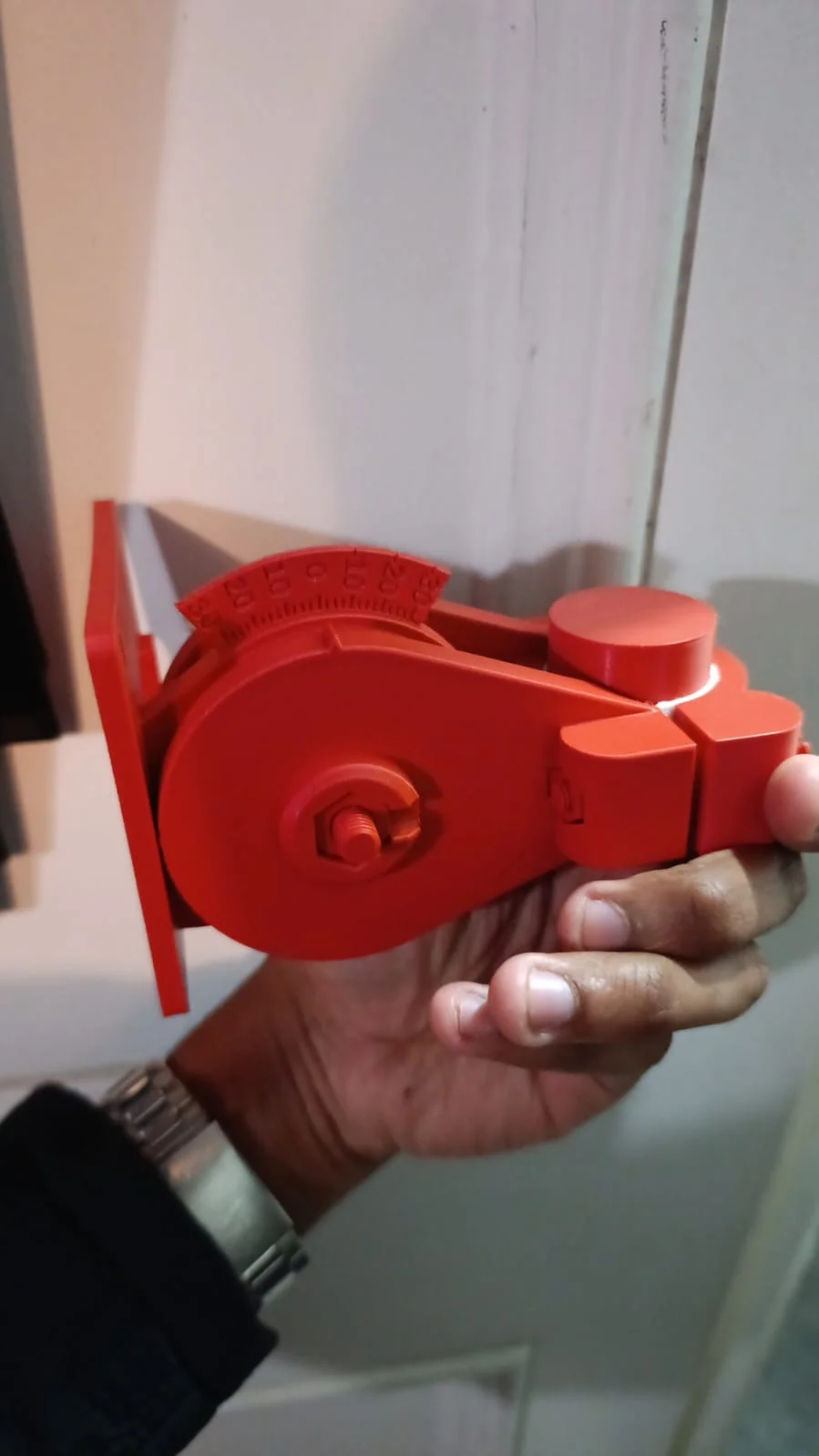
That number sounds dramatic but it reflects how iterative hardware design actually is when you're working to real engineering tolerances. The core mechanism — a pivot joint with a printed degree scale so the angle could be dialled in and read back accurately — went through round after round of refinement.
Early problems were exactly what you'd expect: the pivot was too loose, then too tight; the lock mechanism didn't hold under vibration; the degree markings weren't readable at a glance. Each revision went back to CAD, got adjusted, and came back off the printer as a new test piece.
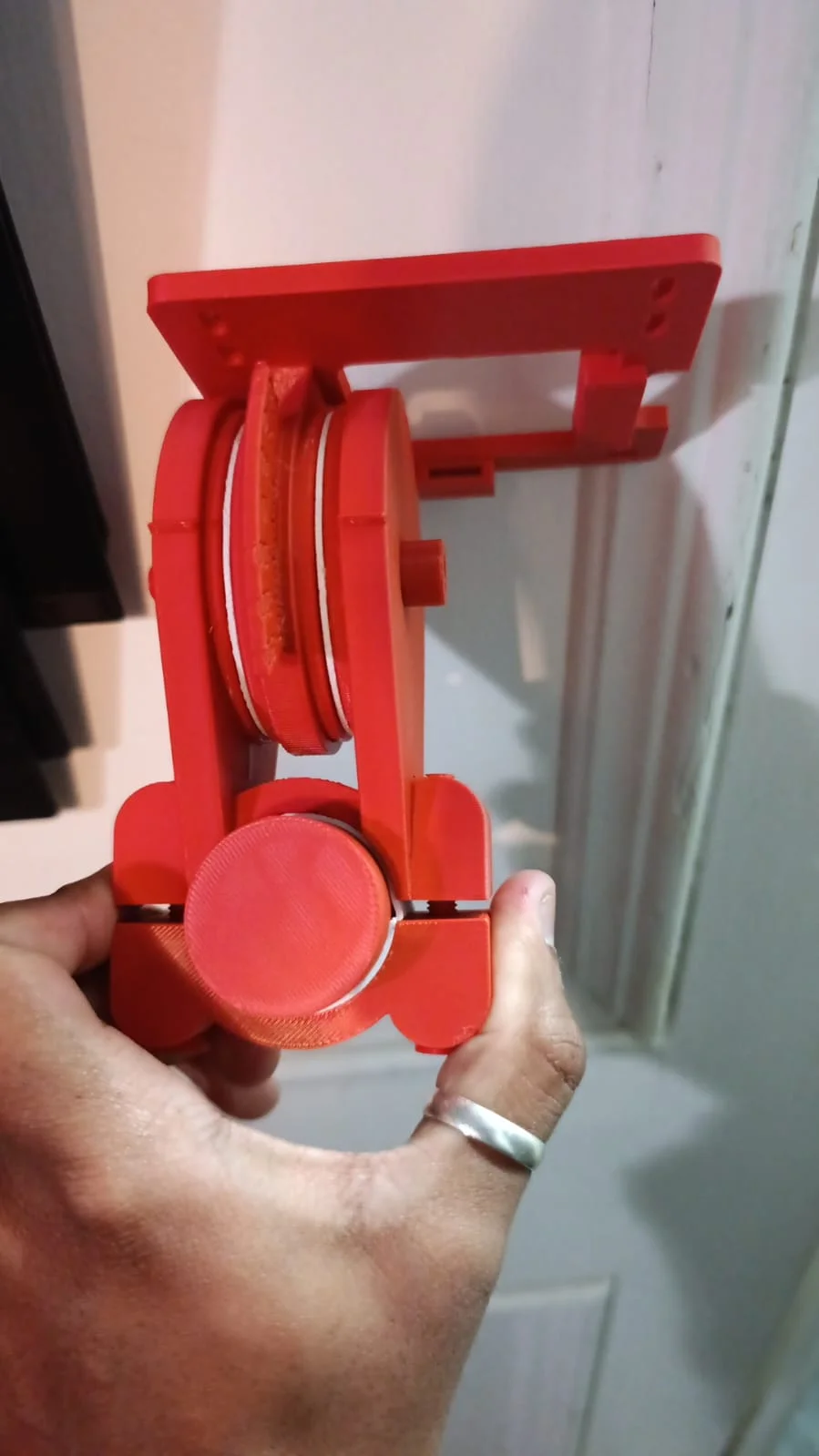
We ran all the prototypes in red PLA on the Bambu Lab A1 Mini — fast to print, easy to spot problems with, cheap to iterate. At revision 47, the design was right: a clean pivot with a calibrated angle scale, a locking mechanism that actually held, and a mounting plate sized to the sensor's footprint.
The final print
Once the geometry was locked, we switched to black ASA for the production run. ASA handles UV and temperature variation far better than PLA — it won't go brittle in the sun or warp in a hot car boot the way PLA will, which matters for anything that's going to live outside near a radar system.
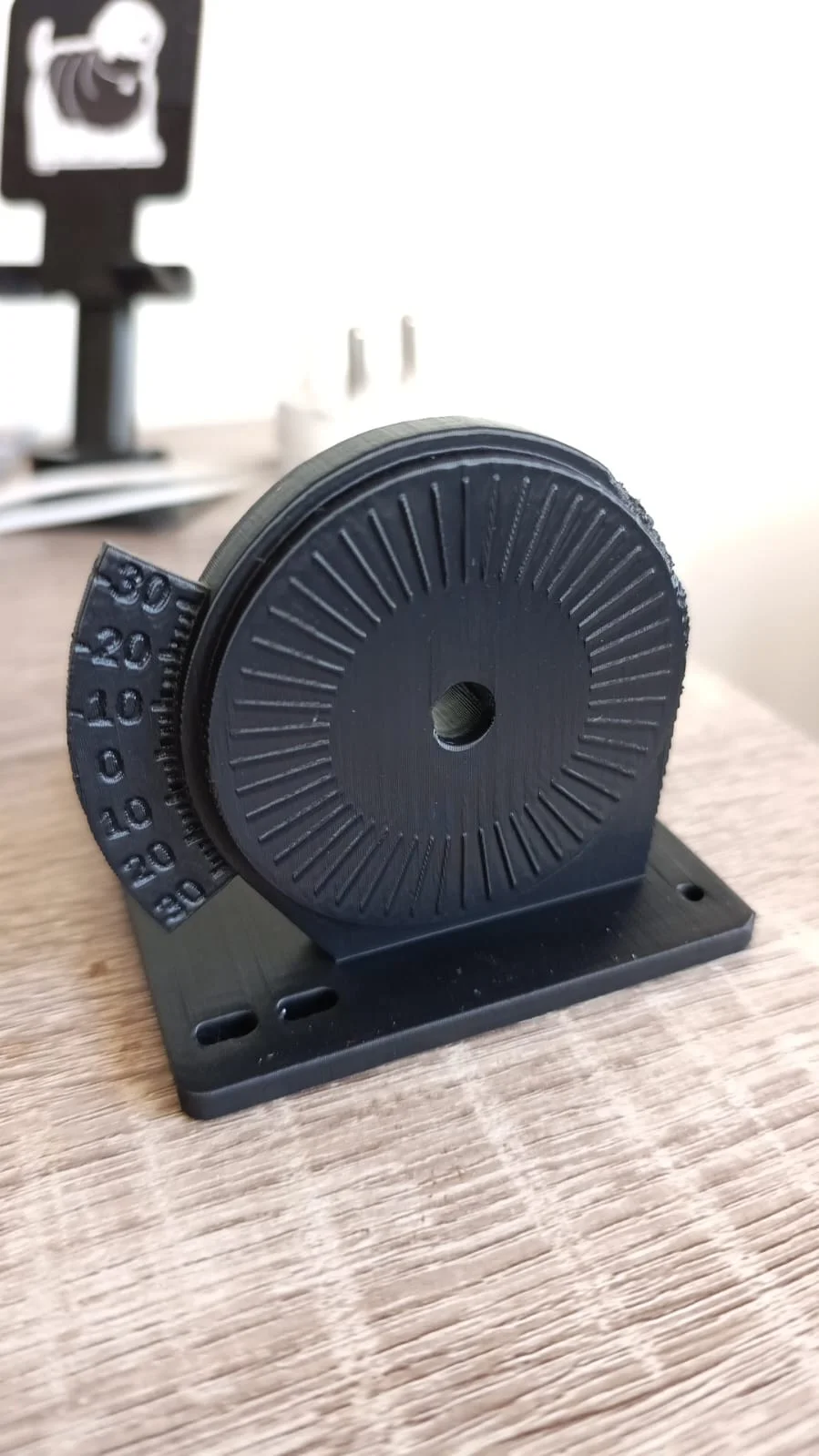
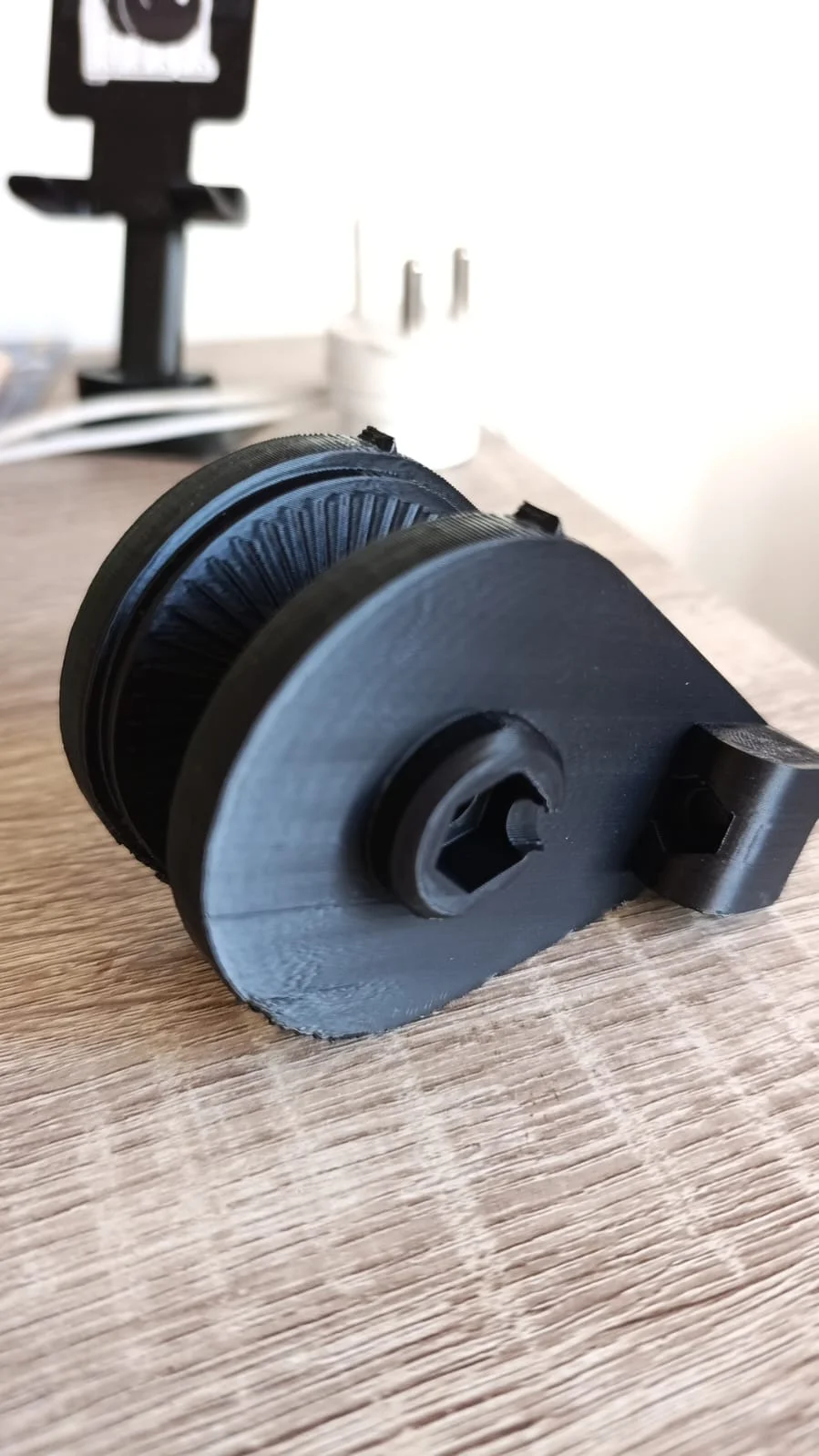
The pivot liner was printed in TPU — a softer material that adds friction and damping so the joint stays exactly where you set it rather than creeping under load.
Packed and ready — then cancelled
The final parts were bagged, labelled, and packed in a proper kit — mounting plate, pivot assembly, TPU liners, and hardware, all separated and ready to assemble. The box was sitting ready to go out the door.
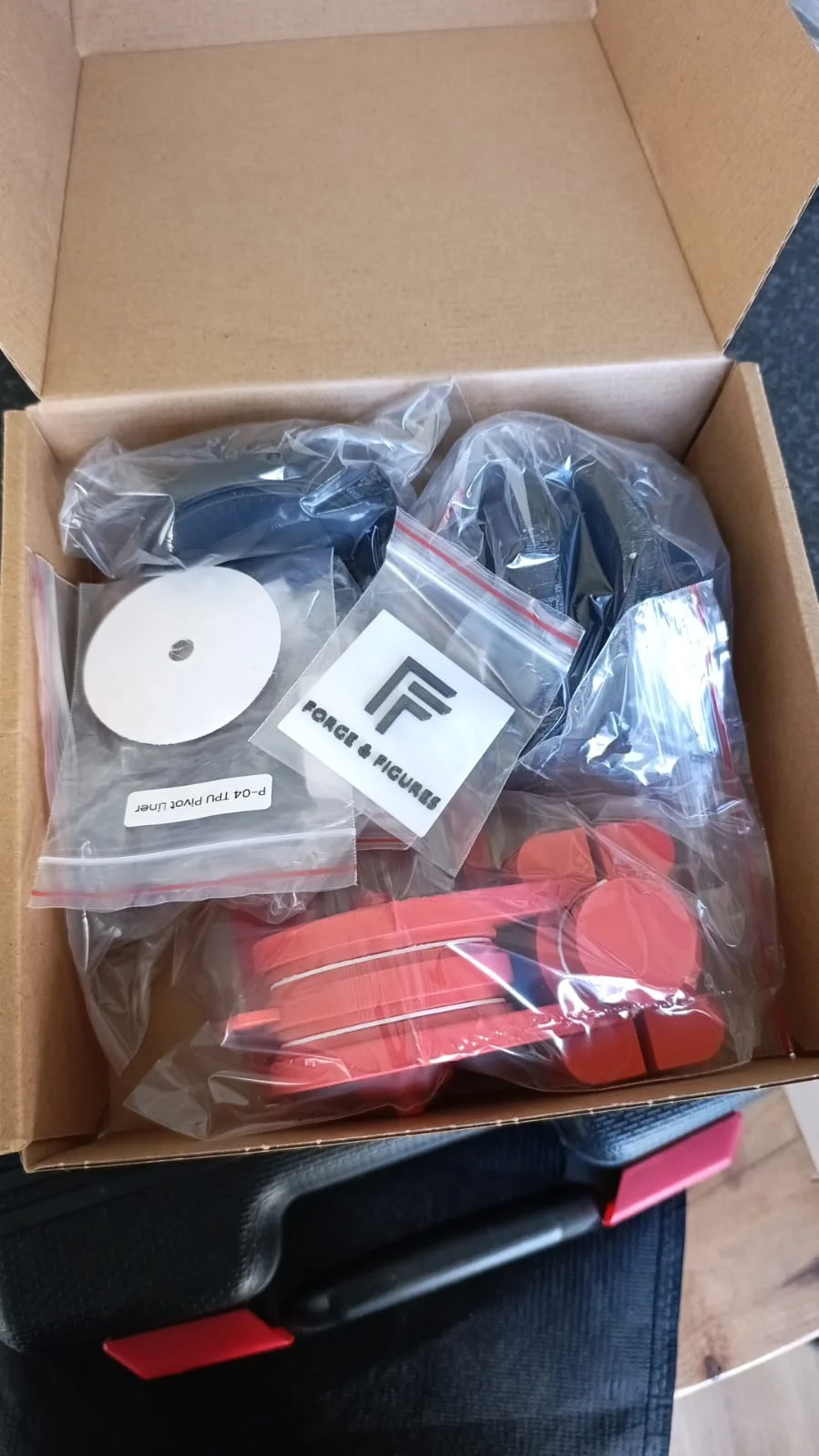
Then Rhevia cancelled the delivery. That's the nature of R&D — sometimes the hardware gets cut at the last moment, for reasons that have nothing to do with the hardware itself.
What we take from it
Forty-seven revisions is a lot of printing, but it's also exactly what rapid prototyping is for. Each iteration was a cheap, fast test of a design change — something that would have taken far longer and cost far more in metal. The final bracket worked as designed. The fact that it didn't make it into production doesn't change that.
If you're working on a hardware project that needs iterated parts — sensor mounts, enclosures, jigs, whatever it is — send us a WhatsApp with where you're at and we'll take it from there.