
We 3D Printed a CubeSat Frame That's Headed for Low Earth Orbit
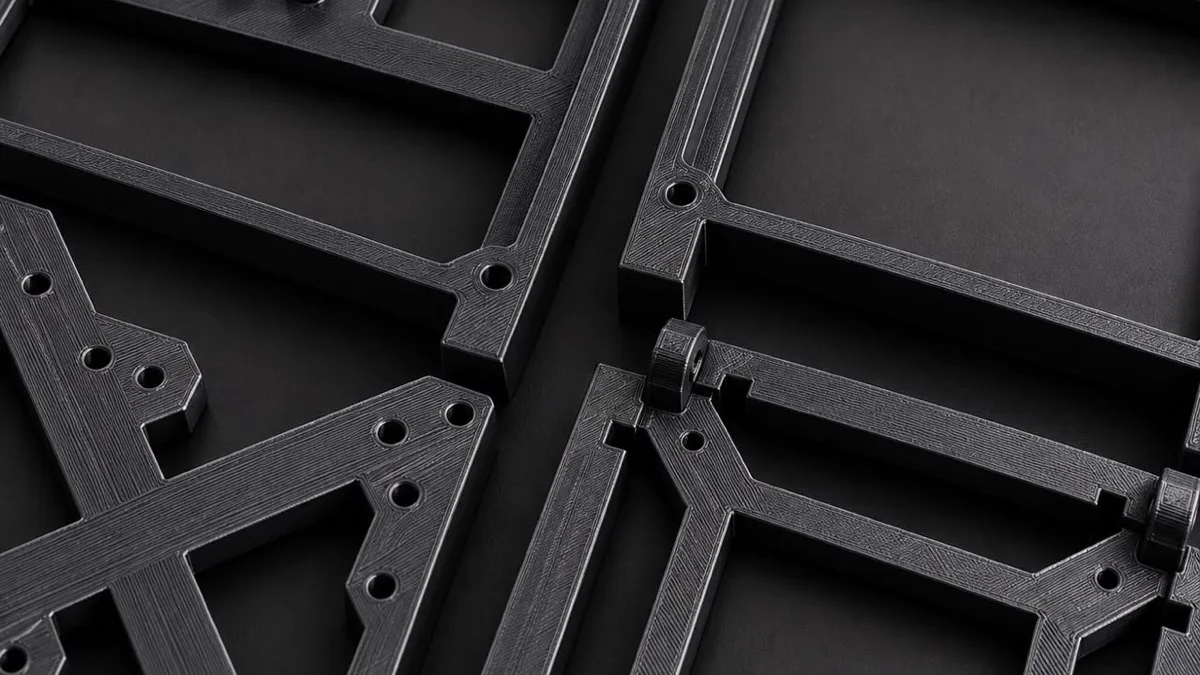
Most of what we print ends up on a shelf, a desk or a car. This one is going a lot further. It's the frame for a CubeSat, a small satellite that's headed for low Earth orbit, and we printed it in black ASA.
What's a CubeSat?
A CubeSat is a satellite built to a standard size. The basic unit, called a "U", is a 10 cm cube, and bigger CubeSats are made by stacking units together. Because every CubeSat follows the same outer dimensions, it can ride to orbit inside a standard deployer alongside other satellites, which is a big part of why universities, research teams and start-ups can afford to fly them at all.
Inside that fixed outline, the frame is the skeleton. It holds the circuit boards, batteries, sensors and radio in place, and it has to keep holding them through launch and everything after.
Four panels, bolted together
The frame comes as four printed panels that bolt together into the finished structure.
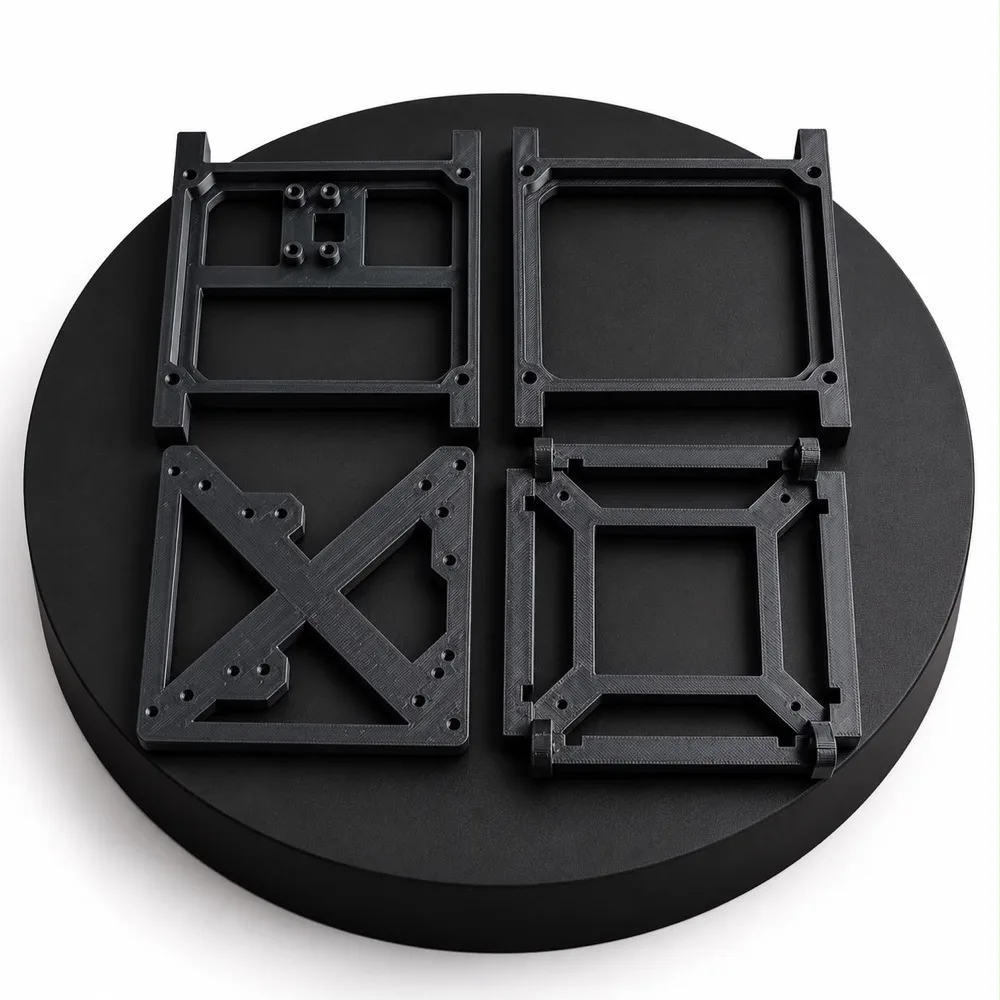
- Two side frames with raised rails running down their long edges and countersunk holes at every corner. One is open in the middle. The other has a crossbar and four standoffs around a rectangular cutout, ready for a circuit board to sit on.
- An X-braced panel. The diagonal cross makes it stiff without filling in the whole face, and the rows of holes along its edges are where it fastens to the rest of the frame.
- A square end frame with a raised tab at each corner and slots along its edges where it meets the side frames.
Every panel is mostly open space. That's deliberate: on anything going to orbit, mass is money, so the material only goes where the frame needs strength.
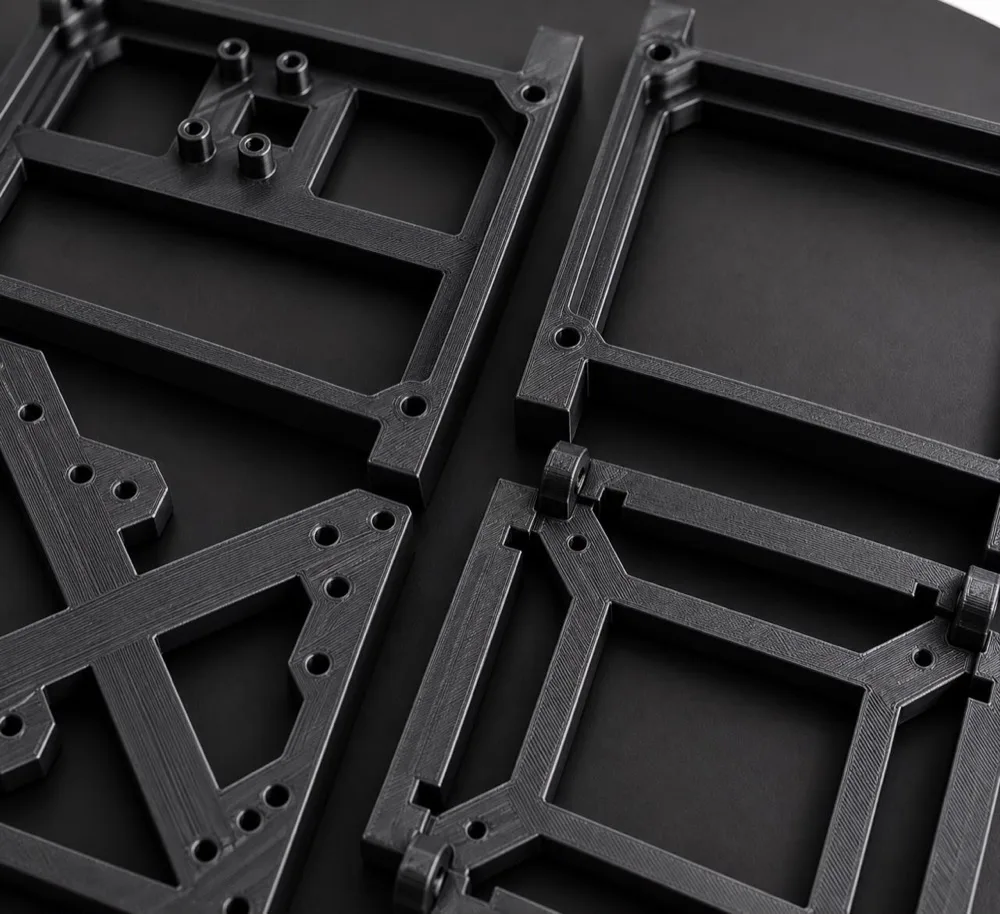
Up close you can see the details that make a frame like this go together properly: the standoffs for the board, the countersinks that let screw heads sit flush, and the slots and tabs where panels meet. Those have to be printed true, or the panels won't line up when they're bolted together.
Why ASA?
We print a lot of parts in PLA and PETG, but neither was right for this one. Low Earth orbit means hard sunlight with no atmosphere filtering the UV, and big swings in temperature as the satellite moves in and out of Earth's shadow.
ASA handles that better than most filaments. It's the material we reach for when a part has to survive direct sun for years, because it holds its colour and shape under UV where other plastics go brittle. It also copes with heat far better than PLA, which starts to soften not much above a hot day. And it's tough and stiff enough to make a frame that keeps its shape.
ASA is harder to print than PLA or PETG. It shrinks as it cools and wants to warp off the bed, so it needs an enclosed printer, a warm chamber and good bed adhesion to come out flat. On a frame where four panels have to line up hole for hole, a warped corner isn't something you can live with.
Signed on the rail
There's one more detail on the frame. Our F mark is printed into the outside of one of the rails.
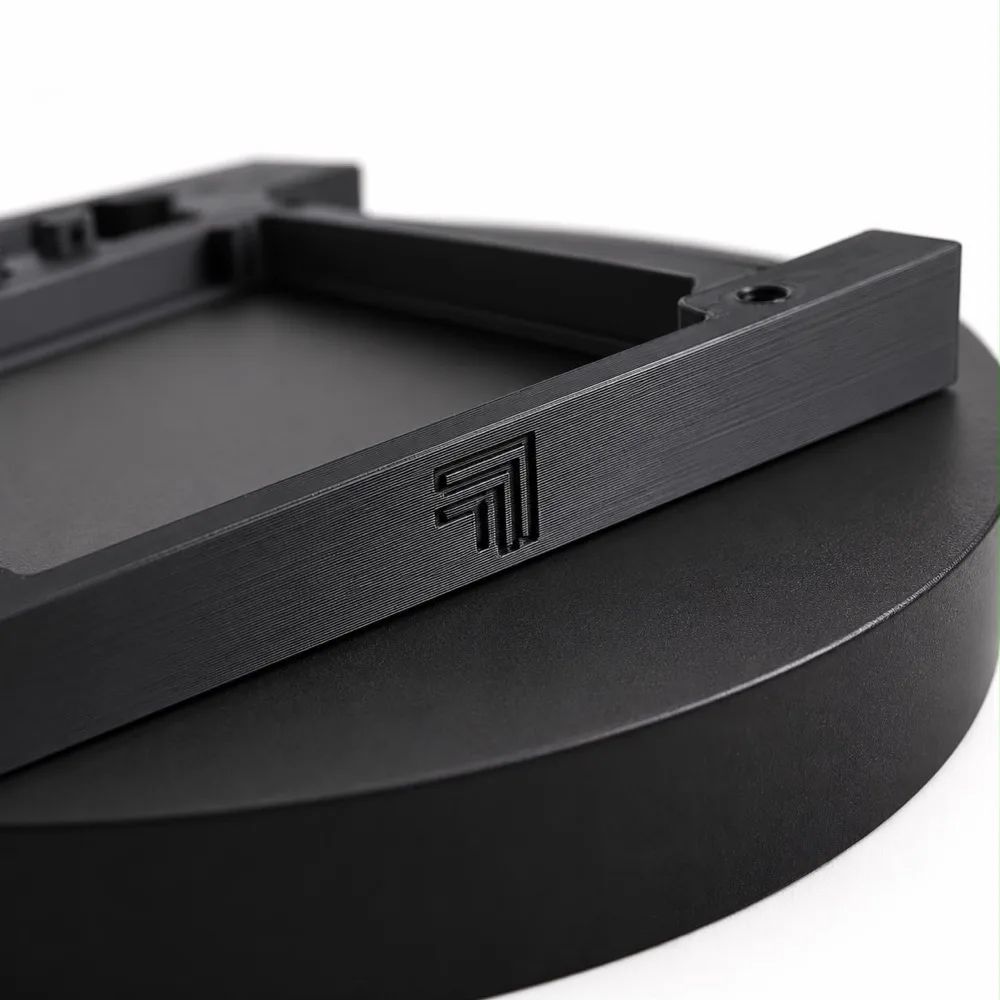
It's a small thing, but it means a part from our Cape Town studio is going to orbit with our name on it, and we're very proud of that.
Got something unusual to print?
Satellite frames aren't an everyday job, but parts that have to hold a shape, line up and stand up to heat or sun are. If you're working on a prototype, a research rig or a part for a harsh environment, send us a WhatsApp with what you're building. We'll talk through the right material and, if you don't have a 3D model yet, design one with you first.
You can also see the frame in the gallery, next to the PETG wind tunnel airfoil we printed for airflow testing.